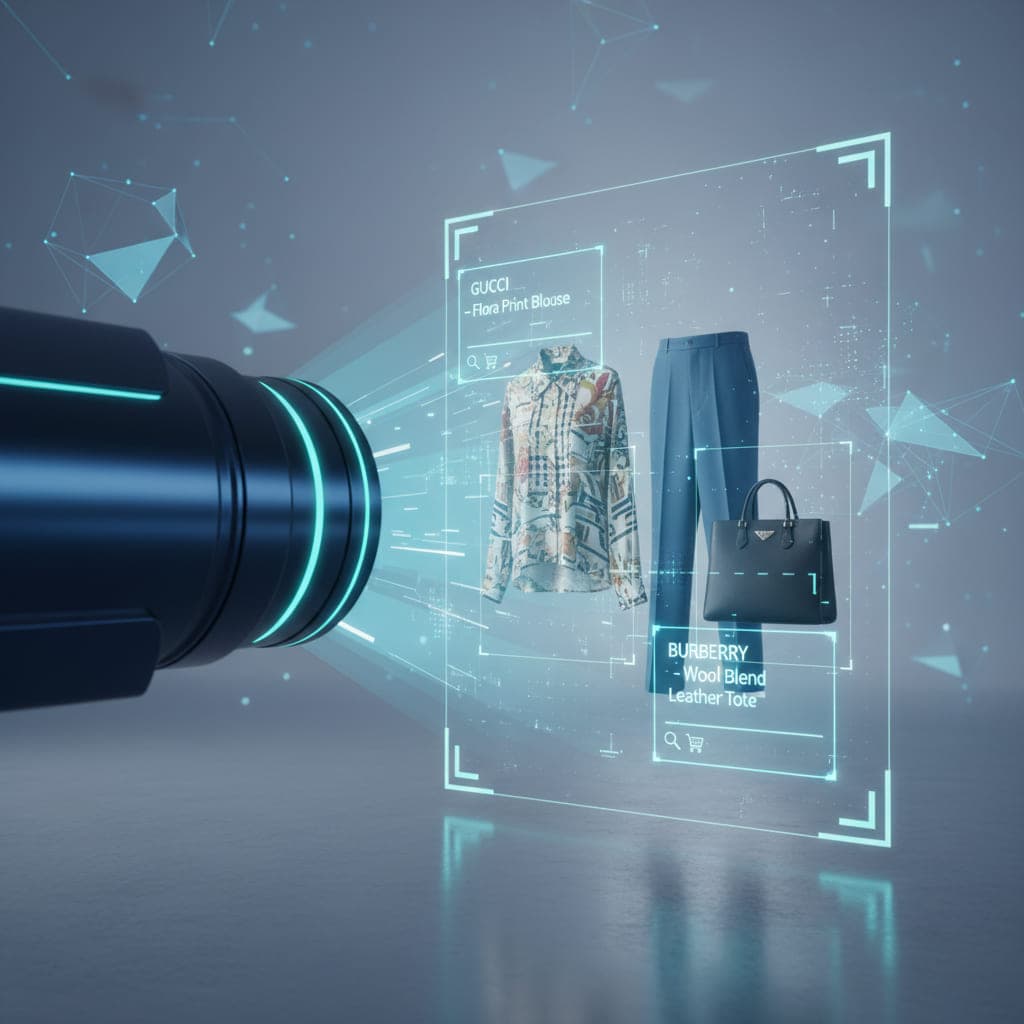
AI Visual Search: How Customers Will Find Your Products in 2026
AI visual search is revolutionizing product discovery. Learn how it works, why it is essential for fashion e-commerce, and how to prepare your catalog.
AI Visual Search: the Future of Product Discovery
Sometimes words are not enough to describe what we are looking for. A consumer spots a pair of shoes on the street, a handbag in a movie, a dress on Instagram — and wants to find something similar to buy. Text keywords fail: "red shoes with gold side buckle and platform sole" rarely produces useful results. AI visual search solves this problem at its root, allowing users to search for products starting from an image rather than from words.
In 2026, 35% of consumers under 35 have already used visual search to find products, and that percentage is growing 40% year over year. For fashion e-commerce, not supporting visual search means losing a growing share of potential purchases.
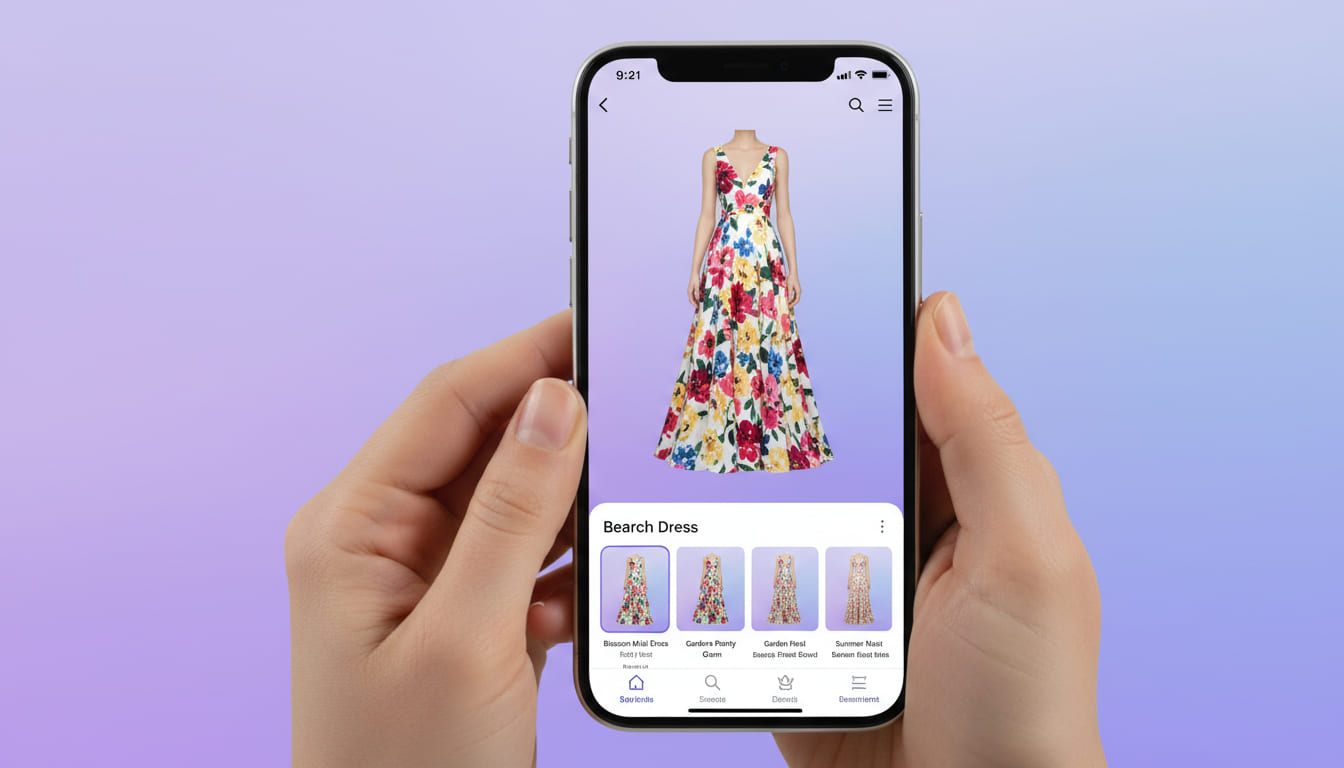
How Visual Search Works in 2026
Modern computer vision models analyze an image by identifying dozens of attributes: shape, color, texture, style, pattern, category. These attributes are converted into a numerical vector (embedding) and compared against the embeddings of all products in the catalog. The result is a list of visually similar products, ranked by relevance.
The accuracy of these systems has improved enormously: in 2024 they found "vaguely similar" products; in 2026 they identify near-exact matches for color, style, and construction details.
Pinterest reports that visual search generates 600% more shopping sessions compared to text search, with an 80% higher conversion rate when the user starts from an inspiration image.
Preparing Your Catalog for Visual Search
Visual search is only as accurate as the images in your catalog. If product photos are dark, blurry, with cluttered backgrounds or inconsistent angles, the system cannot extract reliable attributes. This is where platforms like Katapic make the difference: the AI Scanner standardizes images, removes backgrounds, and generates visual attributes that improve the product's "findability" for both text and visual search.
Additionally, the more structured attributes a product has, the better the visual search engine can refine results. A product with attributes "color: burgundy red, material: leather, style: classic, heel: 7cm" will be found with surgical precision.

Multi-Platform Visual Search
Google Lens, Pinterest Lens, Amazon StyleSnap — tech giants have already integrated visual search into their platforms. But the real opportunity for brands is to implement it directly in their own e-commerce store, where the customer can search and buy without leaving the site. This reduces friction, increases time on site, and improves conversions.
Use Cases Beyond Fashion
Even though fashion is the most advanced sector, visual search works in every category: furniture (find a sofa similar to the one in the photo), beauty (find a lipstick in that shade), food (identify the ingredients of a dish). The technology is universal — the application depends on catalog quality.
The Competitive Advantage of Visual SearchImplementing visual search in your e-commerce in 2026 is not just innovation — it is survival. Consumers expect to be able to search visually, and competitors who offer it capture the customers your site is losing. Start with the foundation: ensure catalog images are high quality and attributes are complete, then integrate a visual search solution.
Frequently asked questions
- How does AI visual search work technically?
- Computer vision models analyze an image by identifying attributes such as shape, color, texture, style, and pattern, then convert those attributes into a numerical vector called an embedding. That embedding is compared against the embeddings of all products in a catalog, and the system returns a ranked list of visually similar items.
- Why do product catalog images matter so much for visual search?
- Visual search is only as accurate as the images in the catalog. Photos that are dark, blurry, have cluttered backgrounds, or use inconsistent angles prevent the AI from extracting reliable attributes, which directly reduces the system's ability to return relevant matches.
- Which major platforms already offer visual search for shopping?
- Google Lens, Pinterest Lens, and Amazon StyleSnap have already integrated visual search into their platforms. The article also highlights that brands can implement visual search directly within their own e-commerce stores to reduce friction and keep customers on-site.
- Is visual search only useful for fashion e-commerce?
- No — while fashion is described as the most advanced sector, the technology applies universally. Use cases include furniture (finding a similar sofa), beauty (matching a lipstick shade), and food (identifying dish ingredients), with catalog quality being the key variable in every category.
- What is the business risk of not supporting visual search in 2026?
- According to the article, failing to support visual search means losing a growing share of potential purchases, as consumer expectations have shifted toward image-based discovery. Competitors who offer visual search capture customers that sites without it are actively losing.