7 Fatal Mistakes in Product Listings (and How AI Can Fix Them)
Your e-commerce product listings hide errors that kill conversions. Here are the 7 most common and how AI can fix them automatically.
7 Fatal Mistakes That Kill Your Product Listing Conversions
Creating effective product listings is a delicate balance between technical information and emotional persuasion. Yet, most e-commerce stores make systematic errors that cost thousands of euros in lost sales every month — often without even realizing it. These mistakes are not obvious: the listings look "fine," but the conversion data tells a different story.
Let us analyze the 7 most destructive mistakes and how AI tools like Katapic can fix them in a systematic and scalable way.
Mistake #1: Copying Supplier Descriptions
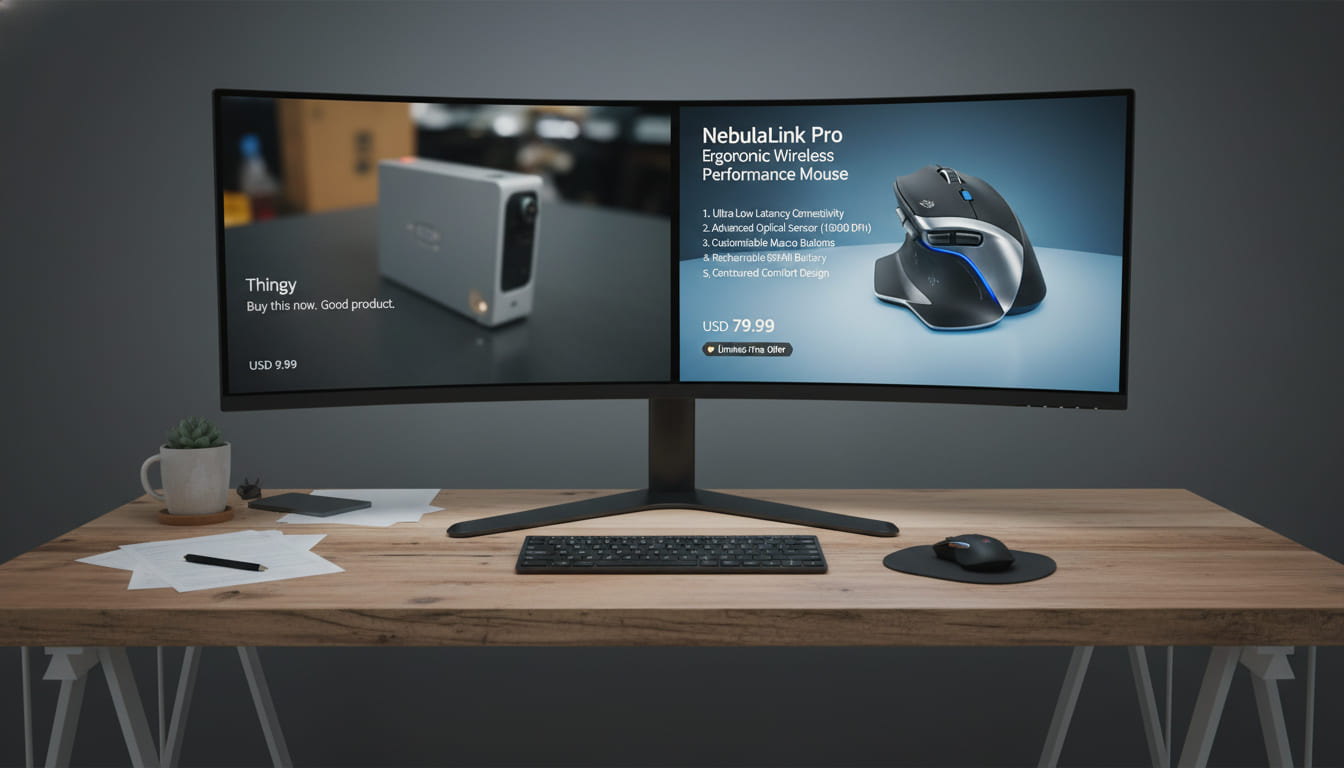
This is the original sin of e-commerce: taking descriptions from the supplier catalog and pasting them onto your site. The result? Duplicate content across dozens of competitor sites, SEO penalties from Google, and zero differentiation. AI generates unique descriptions for each product in seconds, eliminating the problem at its root.
Mistake #2: Descriptions That Are Too Short or Too Long
One line is not enough; three paragraphs is too many. The ideal length varies by category (150-300 words for fashion, 200-400 for tech), but the key point is information density: every sentence must add value. AI automatically calibrates length and content based on the product category.
Mistake #3: Low-Quality or Non-Contextualized Images
A product on a grainy gray background does not sell. Consumers want to see the product "in action" — worn, in a lifestyle context, from multiple angles. The AI Studio can transform a mediocre photo into a professional image with a setting, but the source photo must at least be sharp and well-lit.
Amazon reports that product pages with 5+ high-quality images have a 25% higher conversion rate compared to those with only 1-2 images.
Mistake #4: Missing or Inaccurate Attributes
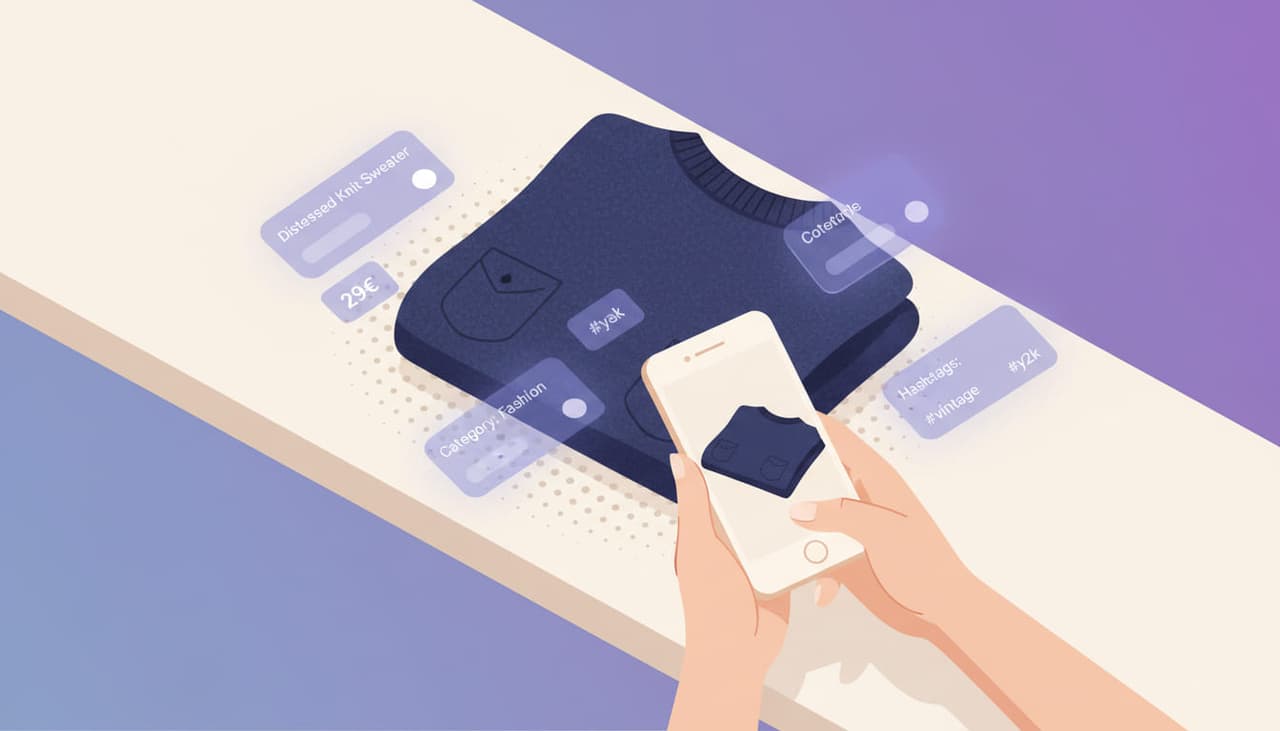
Size "M" without a size chart. Color "blue" without specifying navy, royal, or sky blue. Material "fabric" without composition. Every missing attribute is another reason for the customer to leave the page and look elsewhere. Katapic's AI Scanner automatically extracts detailed attributes from the product photo, reducing human errors.
Mistake #5: Zero SEO Optimization
If your e-commerce does not rank for "women's black leather jacket size 42," you are leaving money on the table. Many product listings have generic titles, empty meta descriptions, and no long-tail keywords. AI naturally integrates relevant keywords into descriptions while maintaining readability for the user.
Mistake #6: Content Not Localized for the Market
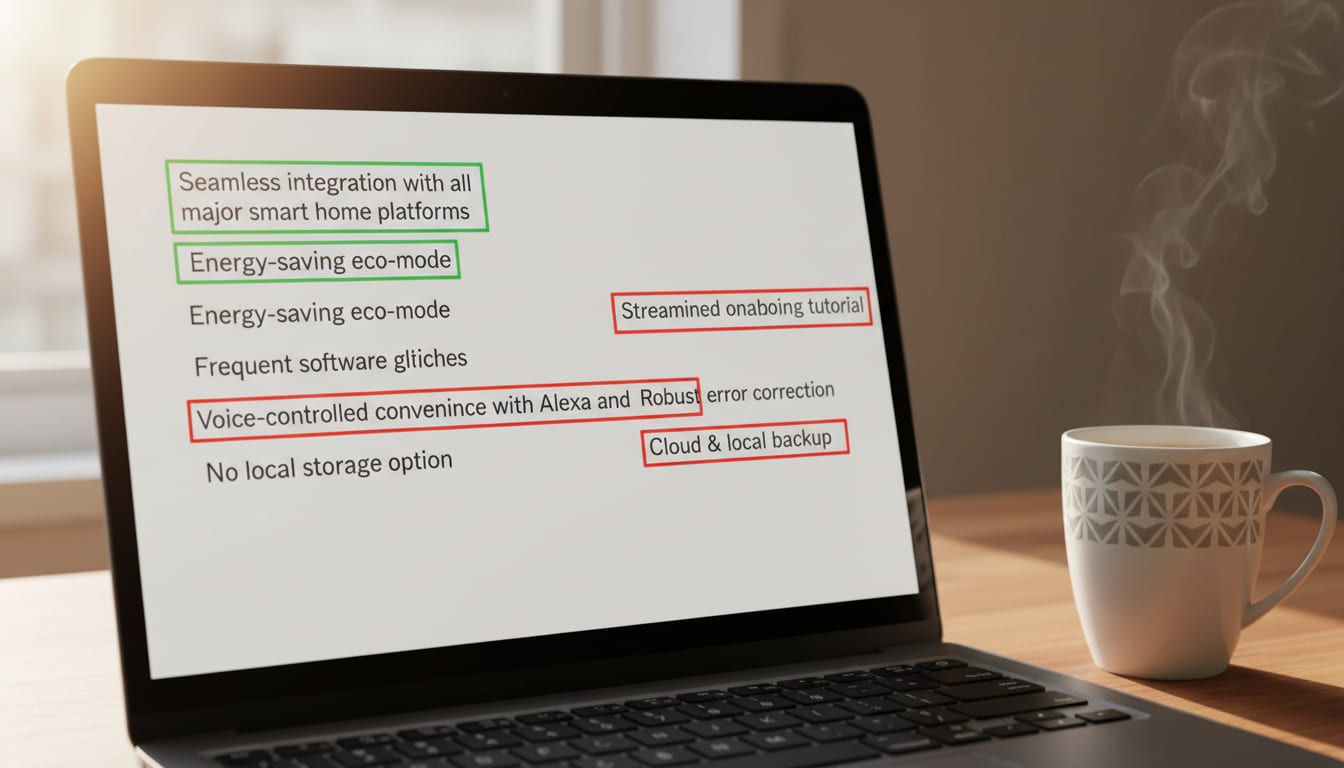
Selling in Germany with descriptions machine-translated from English is a costly mistake. US sizes do not match EU ones, cultural references change, and the linguistic register must adapt. AI generates native content in every language, not simple translations.
Mistake #7: No Post-Publication Updates
A product listing is not "write and forget." Seasonality, trends, customer feedback, and performance data should drive continuous updates. With AI, regenerating and optimizing descriptions based on conversion data becomes a semi-automatic process that keeps the catalog fresh and high-performing at all times.
The Systematic SolutionManually fixing these 7 mistakes across a catalog of 500+ products is a project that takes weeks. With AI, it is a matter of days. The key is not just generating content, but having a system that prevents errors at the source — and that is exactly what an AI cataloging platform does best.
Frequently asked questions
- Why is copying supplier descriptions harmful for an e-commerce store?
- Copying supplier descriptions results in duplicate content appearing across dozens of competitor sites, which leads to SEO penalties from Google and zero brand differentiation. AI tools can generate unique descriptions for each product in seconds, eliminating this problem at its root.
- How does AI help with SEO optimization of product listings?
- Many product listings suffer from generic titles, empty meta descriptions, and no long-tail keywords. AI naturally integrates relevant keywords into descriptions while maintaining readability, helping listings rank for specific search queries such as 'women's black leather jacket size 42.'
- What is the risk of selling in a foreign market without proper content localization?
- Using machine-translated descriptions for markets like Germany is described as a costly mistake because US and EU sizes differ, cultural references change, and the appropriate linguistic register must adapt. AI generates native content in each language rather than producing simple translations.
- How does AI extract product attributes from listings?
- According to the article, an AI Scanner can automatically extract detailed attributes—such as precise color shades, materials, and sizing information—directly from a product photo, reducing the human errors that come from vague or missing attribute data.
- How long does it take to fix these seven listing mistakes across a large catalog using AI versus manually?
- The article states that manually correcting all seven mistakes across a catalog of 500 or more products is a project that takes weeks, whereas with an AI cataloging platform the same work can be completed in a matter of days.