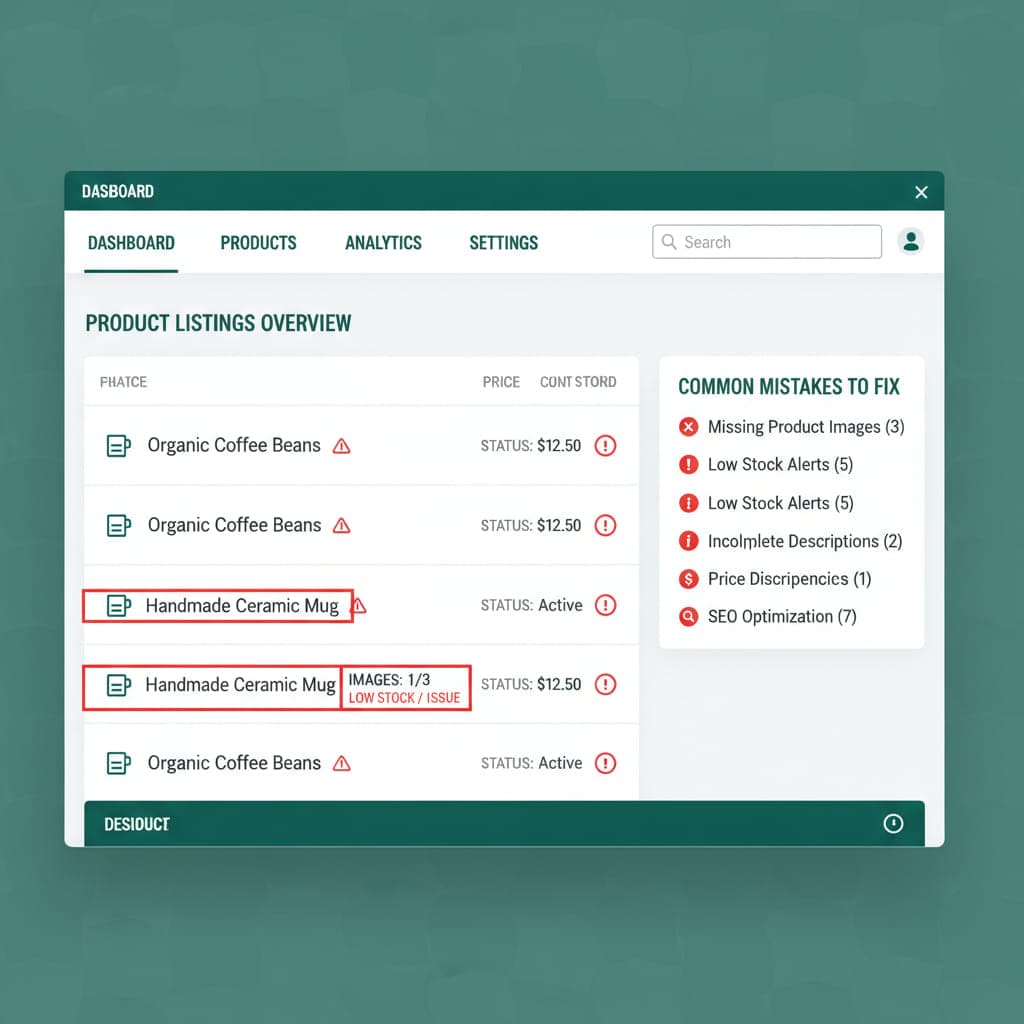
Digital Cataloging for Artisans: AI Transforms Handmade Products
For artisans, cataloging products is time stolen from creation. Discover how AI automates cataloging while preserving the uniqueness of handmade goods.
Digital Cataloging for Artisans: from Workshop to Digital with AI
A ceramist who creates handmade pottery, a goldsmith who produces unique jewelry, a leather craftsman who makes bespoke bags — they all share the same problem: they spend hours creating the product and then have no time (or skills) to catalog it professionally online. The result? Photos taken hastily with a smartphone, two-line descriptions, zero SEO optimization. The product is a masterpiece; the online listing is a disaster.
AI cataloging for artisans changes this dynamic. With tools like Katapic, a simple photo becomes a complete product listing that showcases the uniqueness of the artisanal creation — in 30 seconds, with no technical skills required.

The Specific Challenge for Artisans
Artisans are not content creators or e-commerce experts. Their talent lies in creation, not in digital communication. Hiring a professional photographer and a copywriter for every unique piece is economically unsustainable when the margin per piece is already tight. The result is a paradox: high-quality products presented in a mediocre way, unable to compete online with mass-produced items photographed professionally.
AI levels the playing field. It does not matter whether you are a brand with 50 employees or an artisan working alone in your workshop: the quality of the product listing can be the same.
According to Etsy, listings with professional photos and complete descriptions generate 63% more visits and 40% more sales compared to those with amateur photos and minimal text.
How AI Showcases Artisanal Uniqueness
AI does not generate generic descriptions. When it analyzes the photo of a raku ceramic vase, it recognizes the firing technique, identifies the unique glaze veining, and notes the intentional irregularities that make each piece unrepeatable. The generated description tells a story: the creative process, the materials, the tradition behind the object.
This is fundamental for artisans: the value of handmade lies in the story and uniqueness. AI does not flatten this uniqueness — it articulates and communicates it so that the online customer can perceive it as they would by touching the product in person.
Practical Workflow for the Artisan
- Shoot: photograph the product with your smartphone in natural light
- Upload: import the photo into the AI cataloging tool
- Review: check the generated listing and add personal details
- Publish: export to Etsy, Shopify, social media, or your own website
Total time: 5 minutes per listing (compared to 30-60 minutes with the traditional method).
Multilingual: Sell Worldwide from Your Workshop
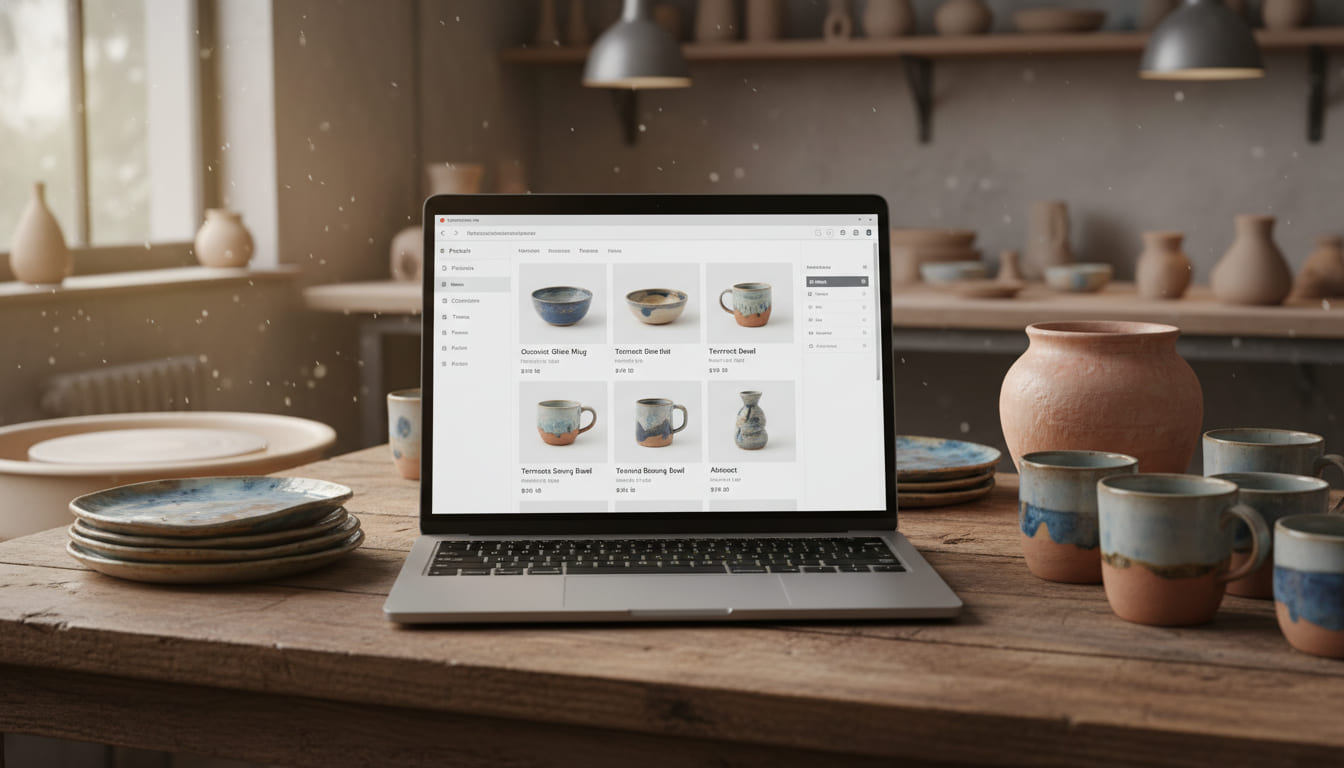
One of the most impactful advantages for artisans is automatic multilingual generation. A Tuscan ceramist can sell on Etsy in 5 languages without knowing any beyond Italian. AI does not translate — it generates native content that resonates with the target market: an American buyer reads a description in perfect English, a German in elegant German, a French customer in refined French.
The Message for ArtisansYou do not have to become a digital marketing expert to sell online. AI is your assistant that transforms your artisanal mastery into professional product listings. Focus on what you do best — create. Technology takes care of the rest.
Frequently asked questions
- How long does it take an artisan to create a product listing using AI cataloging tools?
- According to the article, the entire workflow—shooting, uploading, reviewing, and publishing—takes approximately 5 minutes per listing. This compares favorably to the traditional method, which can take 30 to 60 minutes.
- Can AI cataloging tools handle the unique storytelling required for handmade products?
- Yes. The article explains that AI does not generate generic descriptions; when analyzing a photo of a handmade item, it recognizes craft-specific details such as firing techniques and intentional irregularities, then generates a description that communicates the creative process, materials, and tradition behind the piece.
- Do artisans need technical or digital marketing skills to use AI cataloging tools?
- No technical skills are required. The article states that a simple smartphone photo is all that is needed to get started, and the tool handles the rest, allowing artisans to focus on creating rather than on digital communication.
- How does AI cataloging help artisans sell internationally?
- AI cataloging tools offer automatic multilingual content generation, meaning an artisan who speaks only their native language can have listings that read as native-sounding content in multiple languages, enabling them to reach buyers in different countries without translation expertise.
- Why do artisans struggle to compete online with mass-produced products?
- The article identifies a core paradox: artisans spend most of their time on creation and lack the time or skills for professional digital presentation, resulting in hastily taken photos and minimal descriptions. Hiring professional photographers and copywriters is economically unsustainable given tight margins, leaving high-quality handmade products poorly represented online against professionally photographed mass-produced items.