
Snap a photo and get a complete product listing: title, description, attributes, and optimized image. Here is how AI cataloging works.
From Photo to Product Listing: the Power of AI Cataloging
The traditional process of creating an e-commerce product listing takes a long time: shooting professional photos, editing them, writing the title and description, filling in attributes, optimizing for SEO. Multiplied across hundreds of products, it becomes a bottleneck that slows time-to-market and absorbs valuable resources.
With AI cataloging, this process becomes much faster than creating each listing by hand. You snap a photo with your smartphone, upload it to Katapic, and the AI drafts a complete product listing for you to review: optimized title, multilingual SEO description and extracted attributes. If you want, the AI Studio can also give the photo a professional background, one credit per image.
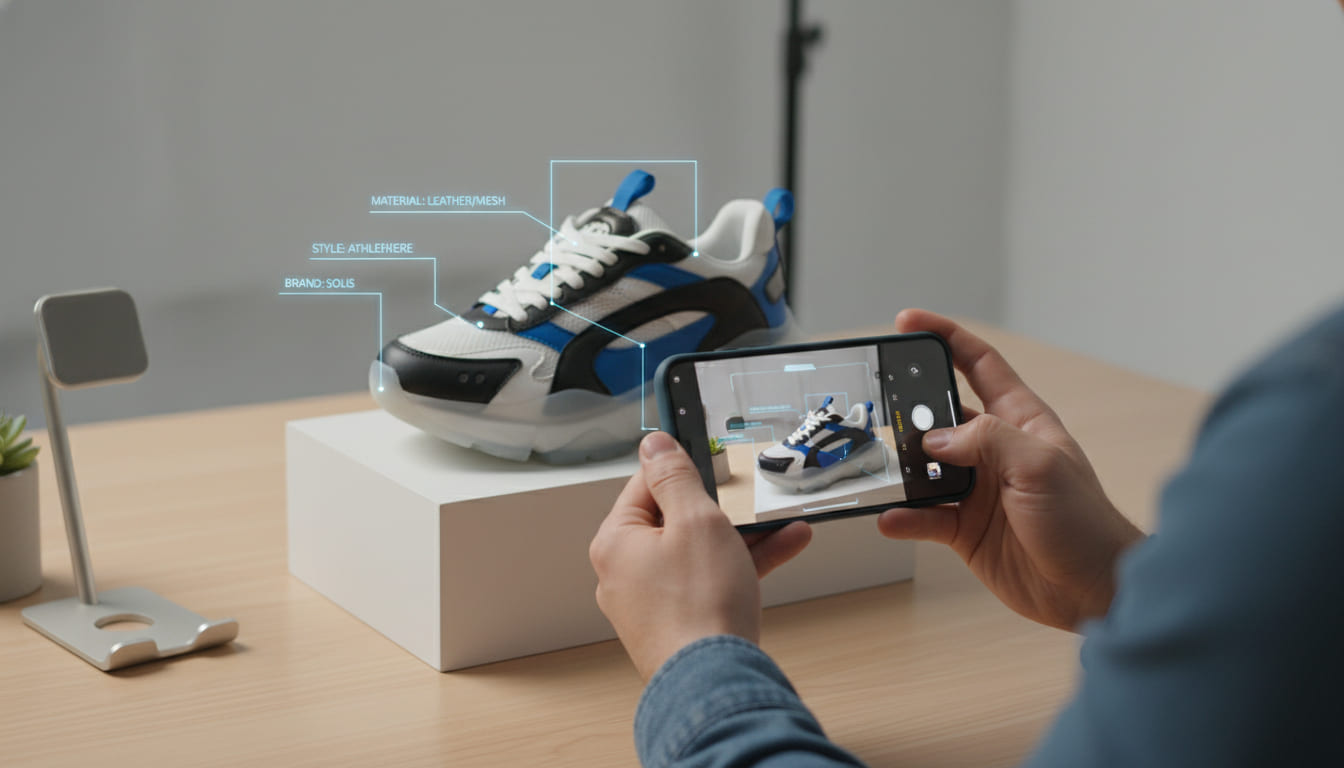
How It Works: from Photo to Draft
The AI drafts the listing and you review it. The draft comes together in these steps:
- Visual analysis: AI identifies what is visible in the photo, such as the product type, color, material and printed details
- Attribute generation: category and subcategory are filled in, plus color and material when they are visible
- Content creation: an SEO-friendly title and engaging description are written in any of 10 languages
- Image (optional): with the AI Studio you can generate a clean studio background or a setting from the photo, one credit per image
The result is a publication-ready product listing that would normally require the coordinated work of a photographer, copywriter, and data entry specialist.
The Quality of AI Output
The legitimate question is: is the quality comparable to human work? The answer in 2026 is yes when the photo is clear: the AI gets most attributes right, with text quality that surpasses the "copy-paste from supplier" descriptions used by the majority of e-commerce stores. Unusual products, rare materials, and highly specific technical details still need a human check.
The optimal operating model is "AI-first, human-reviewed": the AI drafts, a person reviews and adds the details that only direct product knowledge can provide. Reviewing a draft is much faster than creating each listing from scratch.

Use Cases: Who Benefits the Most
Frequent new arrivals: e-commerce stores with high product turnover (fast fashion, accessories, marketplaces) that need to publish hundreds of listings every week.
Multilingual expansion: brands entering new markets that need to translate and adapt the entire catalog. AI writes native content in 10 languages, not simple translations.
Artisans and small brands: those without the budget for cataloging teams who must do everything in-house. Letting the AI draft each listing for review makes professional cataloging accessible to everyone.
Try the WorkflowThe best way to find out if AI cataloging is right for you is to try it. Take 5 products, snap a photo of each, upload them to Katapic, and compare the results with your current listings. If the quality convinces you, you have found a way to create listings much faster than writing each one by hand.
Frequently asked questions
- How long does it take to create a product listing with AI cataloging?
- AI cataloging is much faster than creating each listing by hand: the AI drafts the listing from the photo, and a person reviews it before publishing. Unusual products or technical details may need a closer check.
- How accurate are AI-generated product listings compared to human-created ones?
- According to the article, the AI gets most attributes right when the photo is clear and produces text quality that surpasses the supplier copy-paste descriptions commonly used by most e-commerce stores. Unusual products, rare materials, or highly specific technical details still need a human check.
- What does the AI cataloging process actually generate from a single photo?
- From a single photo, the AI drafts an SEO-optimized title, an engaging product description in any of 10 languages, the category and subcategory (plus color and material when they are visible), all for you to review; if you want, the AI Studio can also generate a studio background for the photo.
- Who benefits most from AI cataloging tools?
- The article identifies three primary beneficiaries: e-commerce stores with high product turnover such as fast fashion and marketplaces, brands expanding into multilingual markets who need native-language content rather than simple translations, and artisans or small brands that lack the budget for a dedicated cataloging team.
- What is the recommended workflow when using AI for product cataloging?
- The article recommends an 'AI-first, human-reviewed' model, where the AI drafts the complete listing and a human operator then reviews it and adds details that only direct product knowledge can provide, which is still much faster than creating each listing by hand.