
AI ROI for E-commerce: Real Numbers and Tangible Savings
How much does investing in AI for your e-commerce catalog really pay off? Analysis with real numbers: time, costs, savings, and break-even point for SMBs and large retailers.
AI ROI in E-commerce: Beyond the Hype, the Real Numbers
Every month brings new AI tools for e-commerce, but the fundamental question remains: how much does investing in AI for catalog management actually pay off? Between hype and reality, what is needed is a concrete analysis with verifiable numbers. In this article, we compare the cost of manual cataloging with AI-automated cataloging, calculating the real break-even point for different business sizes.
We are not talking about futuristic scenarios, but about measurable results that businesses are already achieving today with tools like Katapic.
The True Cost of Manual Cataloging
Creating a single complete product listing (photos, description, attributes, SEO) takes an average of 25-45 minutes of human labor. For a fashion e-commerce with 500 seasonal products, this means 200-375 hours of work, or 1-2 months of full-time effort from a content specialist.
On top of these hours come hidden costs: typos, cross-channel inconsistencies, duplicate descriptions that penalize SEO, and time wasted coordinating photographers, copywriters, and data entry staff. The total cost for 500 listings can easily exceed 10,000-15,000 euros when all factors are considered.
An Italian fashion company with 800 SKUs reduced its cataloging time from 6 weeks to 3 days using AI for automated description generation, attribute extraction, and image optimization.
What Changes with AI Catalog Automation
With platforms like Katapic, the process is radically transformed. The AI Scanner analyzes the product photo and automatically extracts category, color, material, and style. The system generates multilingual SEO-optimized descriptions. The AI Studio creates professional backgrounds without the need for a physical photo studio.
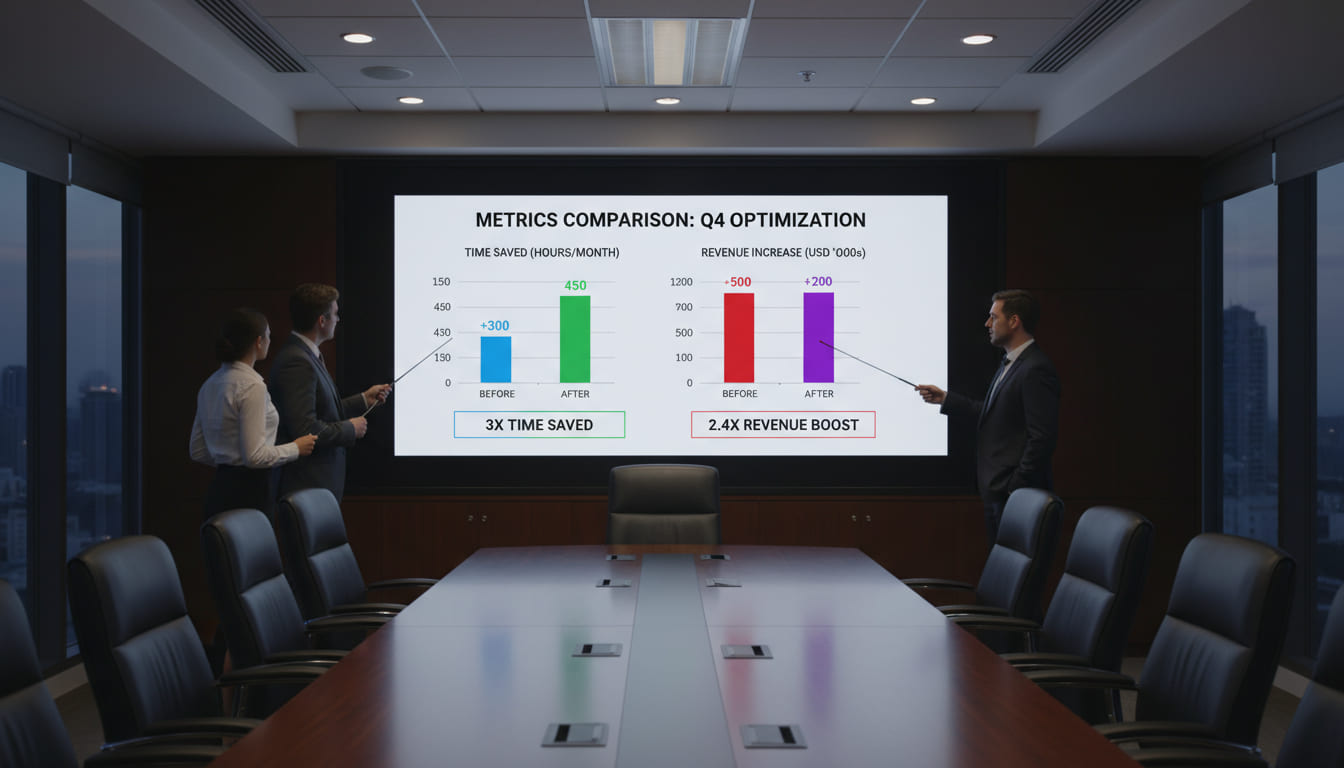
Time per listing drops to 2-5 minutes, including human review. For 500 products, we are talking about 16-40 hours instead of 200-375. The net savings are 80-90% on time and 60-75% on costs, because human oversight remains necessary but is much faster.
Break-even Point by Business Size
For an SMB with 100-300 products, the break-even point is typically reached within the first month of use. The monthly cost of an AI tool is recouped with just 20-30 generated product listings, considering the labor-hour savings. For businesses with larger catalogs (1,000+ SKUs), the ROI becomes exponential: annual savings can exceed 5-10x the investment in the AI tool.
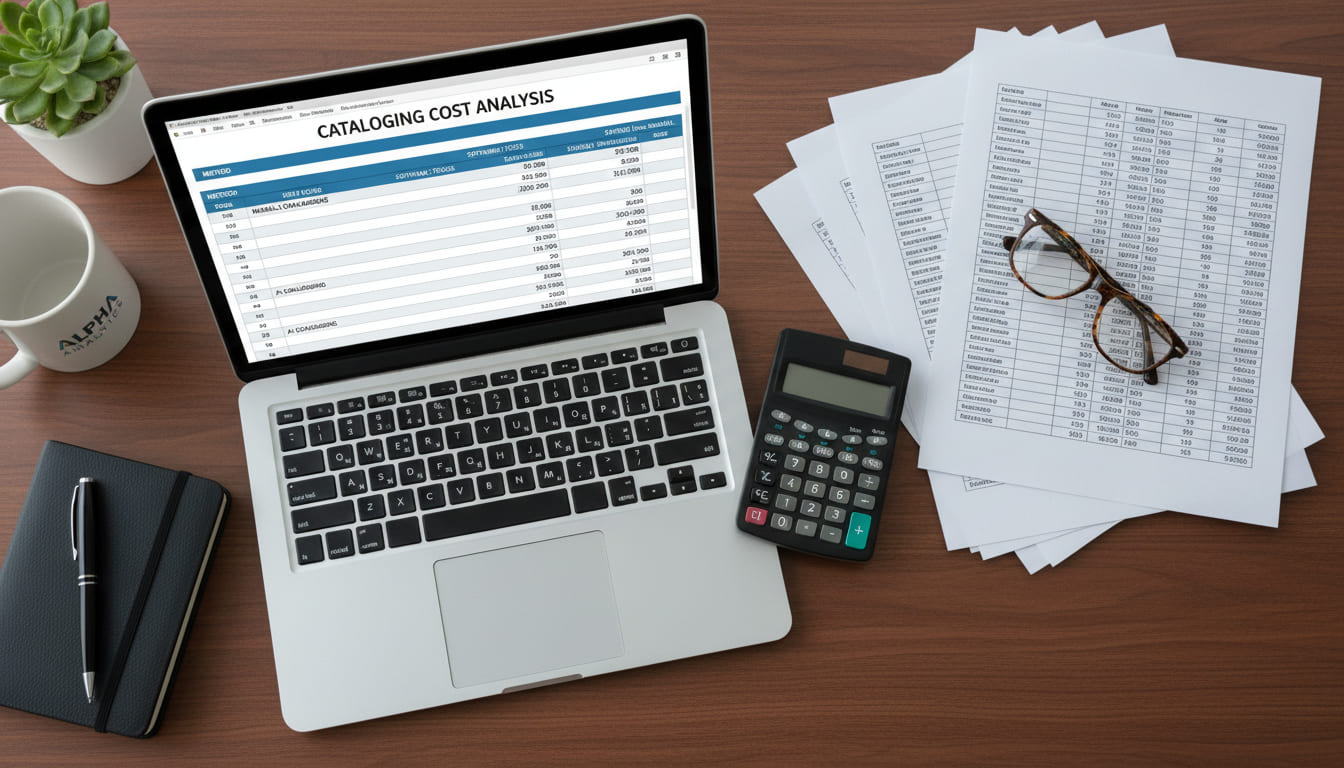
To measure the real ROI of AI in your e-commerce, track these key metrics: average time per product listing (before and after), error rate in descriptions, SEO ranking of product pages, conversion rate of AI-optimized listings, and cost per cataloged SKU. Those who measure, improve — and those who automate with AI measure results that speak for themselves.
Frequently asked questions
- How long does it take to manually create a complete product listing for e-commerce?
- Creating a single complete product listing — covering photos, description, attributes, and SEO — takes an average of 25–45 minutes of human labor.
- How much time and cost can AI catalog automation save compared to manual cataloging?
- AI automation reduces time per listing to 2–5 minutes, compared to 25–45 minutes manually, resulting in net savings of 80–90% on time and 60–75% on costs. Human oversight is still required but is significantly faster.
- When does an e-commerce business typically break even on its AI cataloging investment?
- For SMBs with 100–300 products, the break-even point is typically reached within the first month, with the monthly tool cost recouped after just 20–30 generated listings. For catalogs of 1,000+ SKUs, annual savings can exceed 5–10x the investment.
- What tasks can AI catalog tools automate in the product listing process?
- According to the article, AI tools can automatically extract product category, color, material, and style from photos, generate multilingual SEO-optimized descriptions, and create professional product backgrounds without a physical photo studio.
- What metrics should e-commerce businesses track to measure the real ROI of AI cataloging?
- The article recommends tracking average time per product listing before and after AI adoption, error rate in descriptions, SEO ranking of product pages, conversion rate of AI-optimized listings, and cost per cataloged SKU.