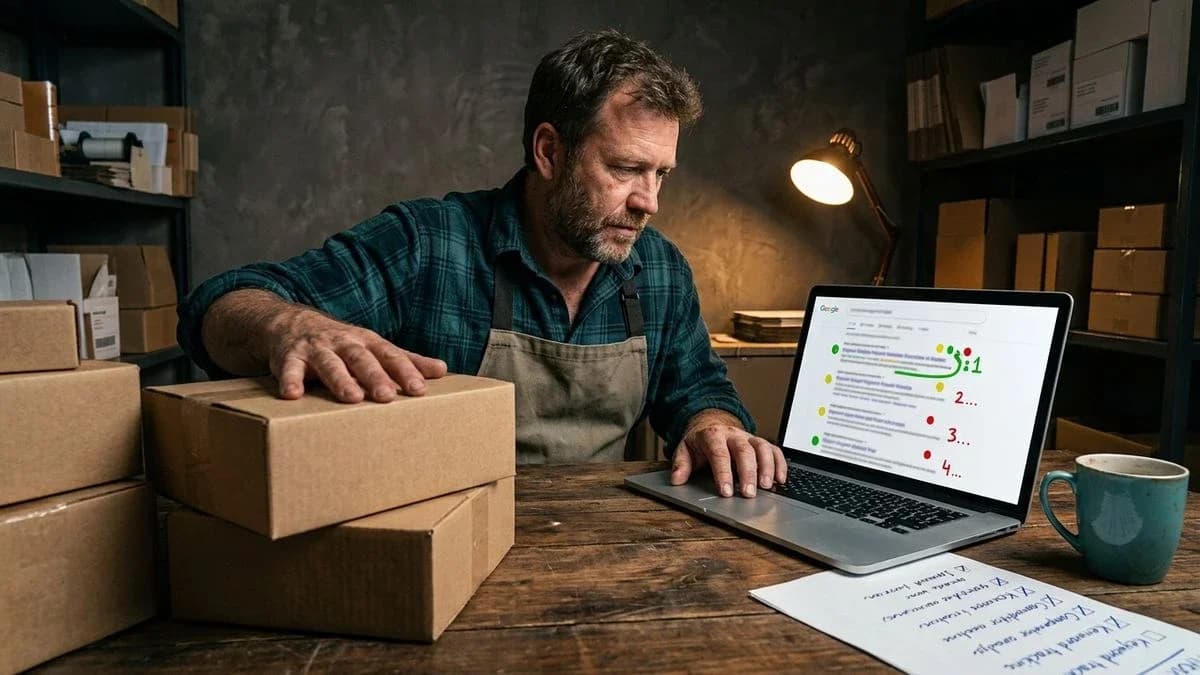
A practical guide to knowing when DIY SEO is still enough and when your WooCommerce catalog needs a consultant or a dedicated tool.
DIY SEO consulting: when it really works for a small ecommerce business
DIY SEO consulting means handling optimization tasks such as titles, descriptions, structured data, and speed independently, without relying on an agency. It works well for small or medium-sized catalogs when the main issue is missing basic structured data rather than complex market competition. It becomes insufficient as the catalog grows, sales channels multiply, or constant monitoring is needed.
A crawler reads your site product by product: title, meta description, schema.org markup, loading time, and the presence of FAQs. In many WooCommerce catalogs, what is missing is structured data, Product schema, normalized attributes, and unique text for variants, not writing expertise. This changes the practical approach: before considering a consultant, it is worth understanding what is actually missing from the data, because the problem is often structural rather than strategic.
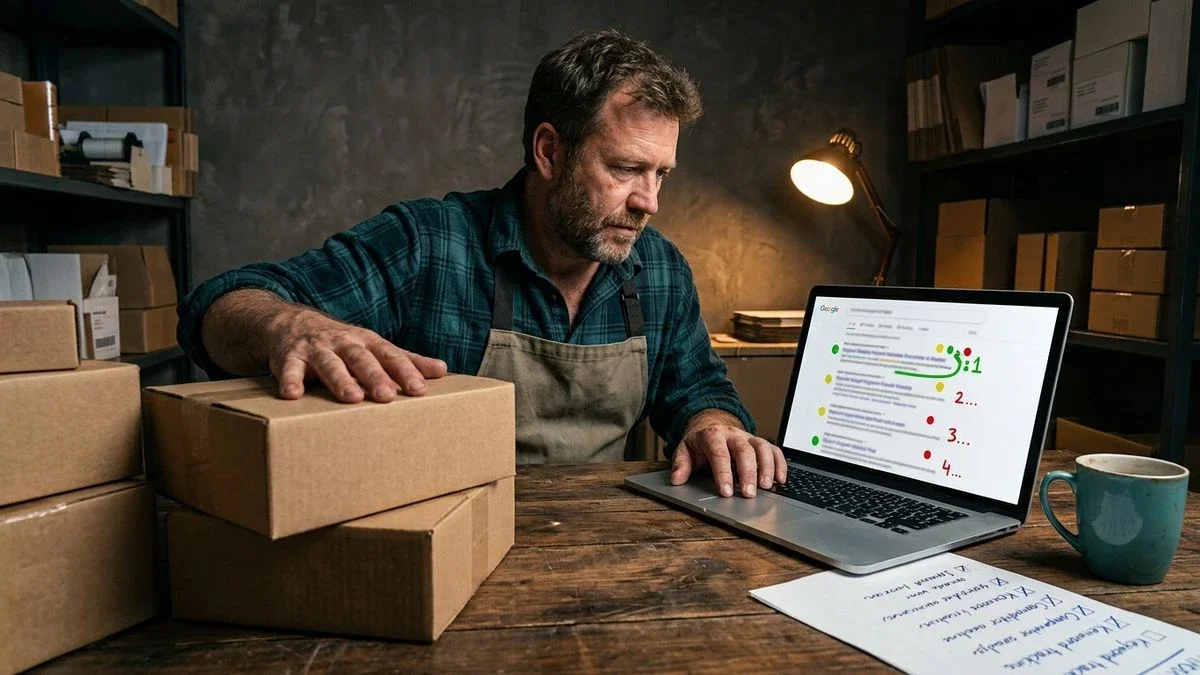
The crossroads: DIY SEO or an SEO consultant?
The choice between doing it yourself and hiring a consultant depends on catalog size, available time, and the type of problem to solve, not on a fixed minimum budget.
Someone selling around one hundred products on a single channel can manage SEO internally with a consistent method. Someone operating across multiple marketplaces, with hundreds of products and little time, risks turning DIY SEO into an occasional, incomplete task that loses effectiveness over time.
For those with little time for daily routinesPeople who also run a physical store or handle daily shipping often postpone SEO updates until “there is time”, and that time rarely comes. In these cases, DIY remains theoretical: they know what needs to be done, but it does not get done.
For those selling across multiple channels with a large catalogA multichannel retailer managing the same catalog on WooCommerce, Amazon, and Etsy faces a different problem: keeping data consistent and complete on every platform. Here, DIY becomes fragmented because each channel has its own rules.
Signs that DIY SEO is still enough
DIY SEO is still sufficient when the catalog is small, products are stable, and the main gap is a technical foundation rather than strategy.
If the site has fewer than fifty products, they do not change often, and the main problem is the absence of well-written meta titles and descriptions, a checklist-led effort may be enough for several months.
- The catalog contains a few dozen products that remain stable over time
- Organic traffic already exists, even if it is low
- Only basic schema.org markup is missing from the products
- There is dedicated time each week, even if it is just two hours
- There are not yet any well-ranked direct competitors
Signs that you need an expert or a dedicated tool
External support is needed when the catalog grows beyond a few dozen products, sales channels multiply, or there is structurally no time for ongoing SEO maintenance.
A craftsperson selling ceramics and managing around forty products may still be able to handle SEO alone. Someone with three hundred products distributed across three channels, with color and size variants, is facing work that requires systematic processes, not just good intentions.
A catalog without Product markup is not invisible to Google or to AI assistants: what holds it back is missing or vague facts, in the page text and in the structured data, which leave an assistant less to confirm and cite.For those whose catalog grows every month
Anyone who regularly adds new products cannot afford to manually repeat the same optimization work each time. Here, the choice between a consultant and a dedicated tool depends on budget and update frequency.
For those without technical skills who do not want to acquire themNot everyone wants to become an SEO expert, and that is not necessary: the goal is to sell, not to learn markup and crawling. In this case, a tool that automates the technical side makes more sense than a course or an hourly consultant.
What a small merchant can do today without an SEO budget
Even without a budget, you can improve titles, unique descriptions, and basic markup on every product page, starting with your best-selling products.
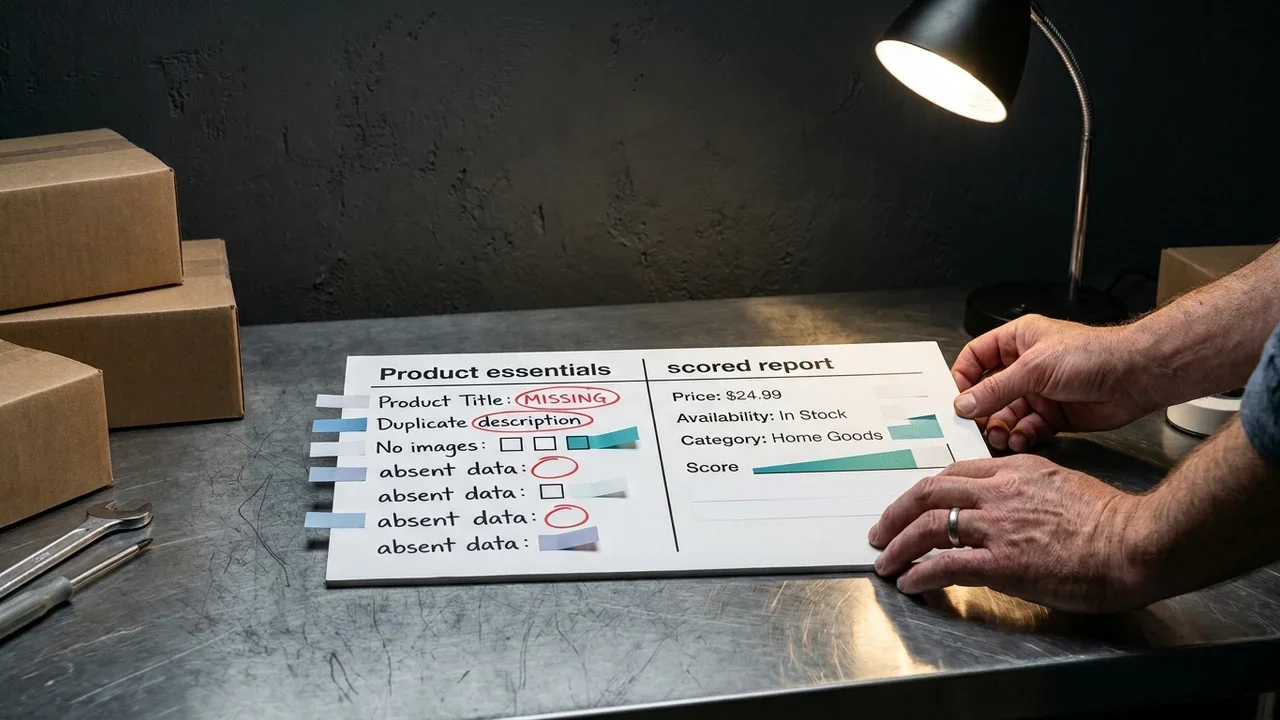
The practical starting point is a manual audit: check that every product has a descriptive title, an original description, not copied from the supplier, and at least the essential Product schema data, including price, availability, and category. Doing this for twenty or thirty products per week builds a concrete base on which to measure results.
- List the best-selling or most-searched products
- Rewrite titles and descriptions, avoiding duplicate text between variants
- Check that images have descriptive alt text
- Review product-page loading times
- Add relevant FAQs where the product generates recurring questions
The hidden cost of waiting too long to decide
Postponing the decision between DIY SEO and external support is not a neutral choice: every month of incomplete product data, in the text and in the structured data, is a month in which AI search engines have less information to cite your products.
The issue is not just Google rankings. AI search engines read the page text and the structured data, and they look for complete, verifiable facts rather than persuasive copy. A catalog that remains incomplete for months builds up a delay that later takes more time, not less, to recover.
Waiting for your catalog to be “ready” for SEO is the surest way to never be ready.Frequently asked questions about when to stop doing SEO yourself
If you are wondering whether it is time to stop managing SEO alone, start with a simple question: how much time do I spend on this work each week, and could that time generate more value elsewhere in my store?
How to check your catalog's AEO status for free
Before choosing between DIY SEO and a consultant, it makes sense to objectively measure where your catalog stands against SEO and AEO criteria.
An anonymous, read-only checker can show which products have missing data without involving anyone or changing anything. From there, it becomes easier to decide whether the required work is manageable on your own or calls for support.
How Katapic fits into this decision
Katapic was created for merchants facing exactly this crossroads: they do not want to become SEO experts, but they need to know precisely what their catalog is missing to be found on Google and AI search engines. No endless menus, no three-hour onboarding. Katapic gives every product four scores: SEO, AEO, brand relevance, and data completeness, so the decision between DIY SEO and external support is based on concrete data rather than impressions. Katapic's rewriting engine also works with the catalog's real data, without inventing specifications that are not there. Anyone who wants to start with an honest snapshot of their catalog can begin with Katapic.
How much time does DIY SEO consulting cost?It depends on catalog size: even for around thirty products, it takes steady work to build a solid foundation. Larger catalogs require more time or dedicated support; otherwise, the work remains incomplete.
Is an SEO consultant always necessary for small merchants?No. A consultant becomes necessary when the catalog grows, sales channels multiply, or there is no time for consistent maintenance. For small, stable catalogs, a well-applied DIY method can be enough for a long time.
How can I tell whether my WooCommerce catalog is ready for AEO?You can check it for free with the free WooCommerce AEO checker, an anonymous, read-only scan that reads the latest products, up to 100, and gives each one an SEO score and an AEO score, with a data readiness check.
Does DIY SEO also work for sellers using Amazon or Etsy alongside WooCommerce?Yes, but it requires more attention: each channel has its own display and ranking rules. A foundation of accurate data, titles, unique descriptions, and attributes, remains the common starting point across all channels.
What should I check before contacting an SEO consultant?First, identify which data is actually missing from your catalog: product schema, duplicate descriptions, and page speed. If the problem is technical and repetitive, a dedicated tool may solve it before you hire an hourly consultant.
Frequently asked questions
- How much time does DIY SEO consulting cost?
- It depends on catalog size: even for around thirty products, it takes steady work to build a solid foundation. Larger catalogs require more time or dedicated support; otherwise, the work remains incomplete.
- Is an SEO consultant always necessary for small merchants?
- No. A consultant becomes necessary when the catalog grows, sales channels multiply, or there is no time for consistent maintenance. For small, stable catalogs, a well-applied DIY method can be enough for a long time.
- How can I tell whether my WooCommerce catalog is ready for AEO?
- You can check it for free with the free WooCommerce AEO checker, an anonymous, read-only scan that reads the latest products, up to 100, and gives each one an SEO score and an AEO score, with a data readiness check.
- Does DIY SEO work for sellers using Amazon or Etsy alongside WooCommerce?
- Yes, but it requires more attention: each channel has its own display and ranking rules. Accurate data remains the common starting point across all channels.
- What should I check before contacting an SEO consultant?
- First, identify which data is actually missing from your catalog: product schema, duplicate descriptions, and page speed. If the problem is technical and repetitive, a dedicated tool may solve it before you hire an hourly consultant.